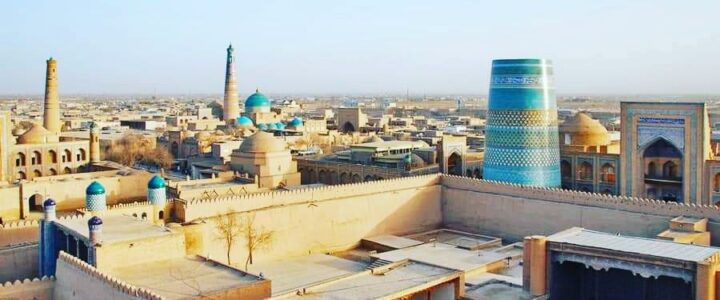
20-day travel program Uzbekistan, Tajikistan & Turkmenistan

20-day travel program Uzbekistan, Tajikistan & Turkmenistan

Day 1: Germany — Tashkent

Flight from Germany to Tashkent. Arrival in Tashkent, transfer to the hotel. Overnight at the hotel.

Day 2: Tashkent

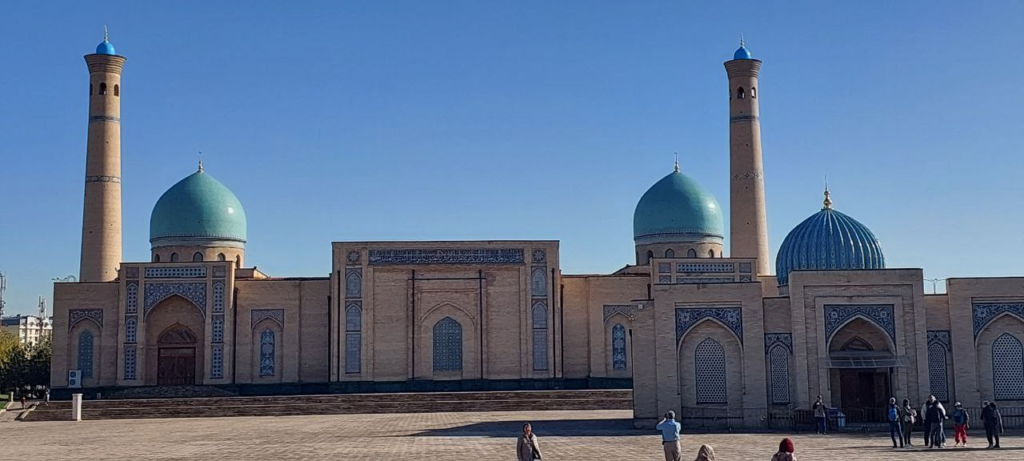
Tashkent has a history spanning more than 2,200 years. Tchach (the city’s former name) was an important commercial and cultural center in Central Asia and welcomed the caravans of the Silk Road. Under the Khaybanid dynasty, large madrasas and mosques were built in the 16th century; this was the city’s golden age: the Hazrat Imam complex, including the madrasa of Barak Khan (16th century), the ancient Jami Mosque (Friday Mosque), which is still active today, and the mausoleum of Kaffal Chachi – the pilgrimage site with the tomb of a great philosopher, poet, and doctor of Islam who lived in the 10th century; and the Grand Bazaar, Tcharsu, very beautiful and very typical. The Tashkent Metro, the first in Central Asia, is unique in that each of its stations was designed by the country’s greatest artists around a specific theme: cotton, the Uzbek poet Alikher Navoi, etc. Panoramic tour: Amir Temur Square, Independence Square, Theater Square, etc. Overnight at the hotel.

Day 3: Tashkent – ​​Khujand (Tajikistan) (165 km)

Breakfast at the hotel. Transfer to the Tajik-Uzbek border. Customs formalities. Transfer to Khujand. Arrival and sightseeing in Khujand. Khujand is located not far from the Fergana Valley on the Syr Darya River. It is another ancient city with a history dating back to Cyrus the Great of Persia and Alexander the Great. Today, it is the second largest city in Tajikistan and home to the largest market in Tajikistan – the Panjshanbe Bazaar. The city tour of Khujand includes the bazaar and the adjacent Maslihaddin Mosque, the Khujand Historical Museum, and the Arbob Palace. In the evening, we will take a walk in Kmaoli Khujand Park and see the Lenin Statue. Dinner. Overnight at the hotel.

Day 4: Khujand — Istaravshan — Penjikent (260 km)

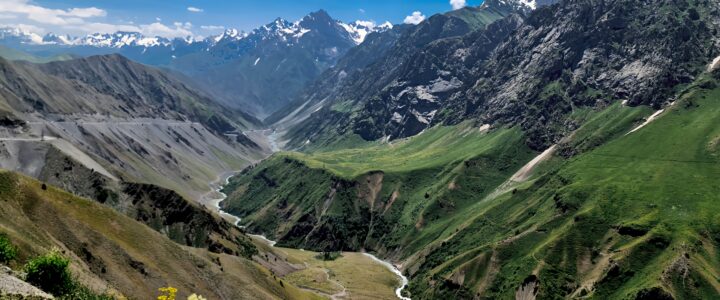
From Khujand, we first travel to Istarafshan and finally to Penjikent. Istarafshan was founded in the 6th century BC by Cyrus the Great and recently celebrated its 2,500th anniversary. The Timurids of the 14th century then called themselves Istaravshan Ura-Tube, and the city’s artisans were highly respected in Central Asia. Today, Istarafshan is known in Tajikistan for its blacksmiths, who produce, among other things, high-quality knives. We will visit the blacksmith workshops near the market entrance. Continue to Penjikent. The road from Istaravshan to Penjikent is very scenic and crosses the Shakhriston Pass. Arrival in Penjikent. Dinner. Overnight at the hotel.

Day 5: Penjikent – ​​Seven Lakes – Penjikent

Breakfast and visit to the remains of ancient Sarazm (5,500 years of history). Archaeological excavations have uncovered traces of the ancient irrigation system. In the fourth millennium BC, Sarazm became a major metallurgical center, processing gold, silver, copper, and other metals.

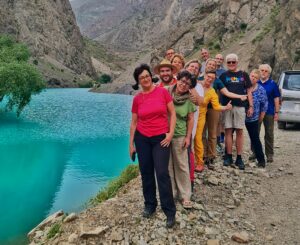
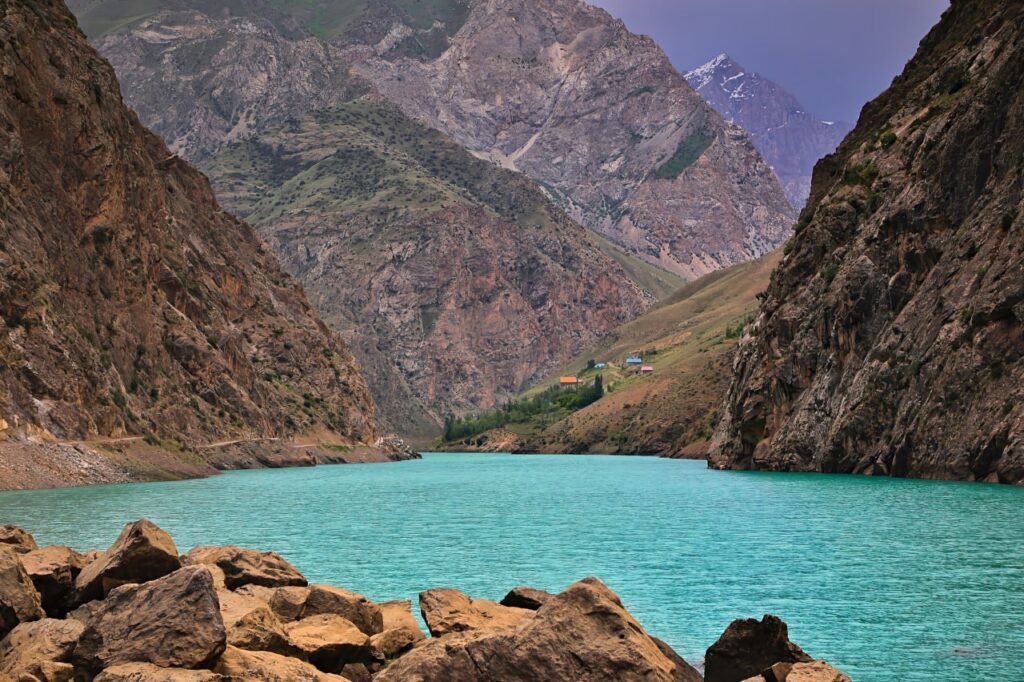
About half an hour from Penjikent, we drive towards Dushanbe, turn right, and follow a mountain road that leads us through the Shing Gorge with its famous Seven Pearls of Tajikistan – seven mountain lakes, each with its own unique color, microclimate, and flora. We will certainly make a photo stop at each of the lakes. The roads are very poor and steep, but we’re lucky to have experienced drivers. After a picnic lunch, we continue to the sixth lake, taking a short walk in the village of Podrud. From the sixth lake, we hike in less than an hour to the seventh and final lake, Hazorchashma. We’ll rest, enjoy the scenery, and meet some shepherds who stay there with their sheep during the summer months. After a short while, we hike down to the car at the sixth lake and return to Penjikent. Overnight at the hotel.
 

Day 6: Penjikent – ​​Dushanbe (235 km)

After a leisurely breakfast, we drive 235 km towards the Tajik capital, Dushanbe. Upon arrival, we begin our city tour of Dushanbe with a visit to the National Archaeological Museum of Tajikistan. Our next stop is the Navruz Palace. This building was originally intended to be the largest teahouse in the world. During construction, which involved hundreds of artisans from across the country, the interior became so impressive that it was decided to convert it into a palace instead of a teahouse. Today, most of the rooms are used exclusively for official government meetings with guests from abroad or for international conferences. We then visit the statue of Ismail Samani. Dinner. Overnight at the hotel.

Day 7: Dushanbe – Shahrisabz (Uzbekistan)

Early morning transfer to the Uzbek-Tajik border. Customs and passport control on both sides, border crossing, and onward journey to Shahrisabz. Arrival in Shahrisabz. Dinner. Overnight at the hotel.

Day 8: Shahrisabz – Samarkand (170 km)

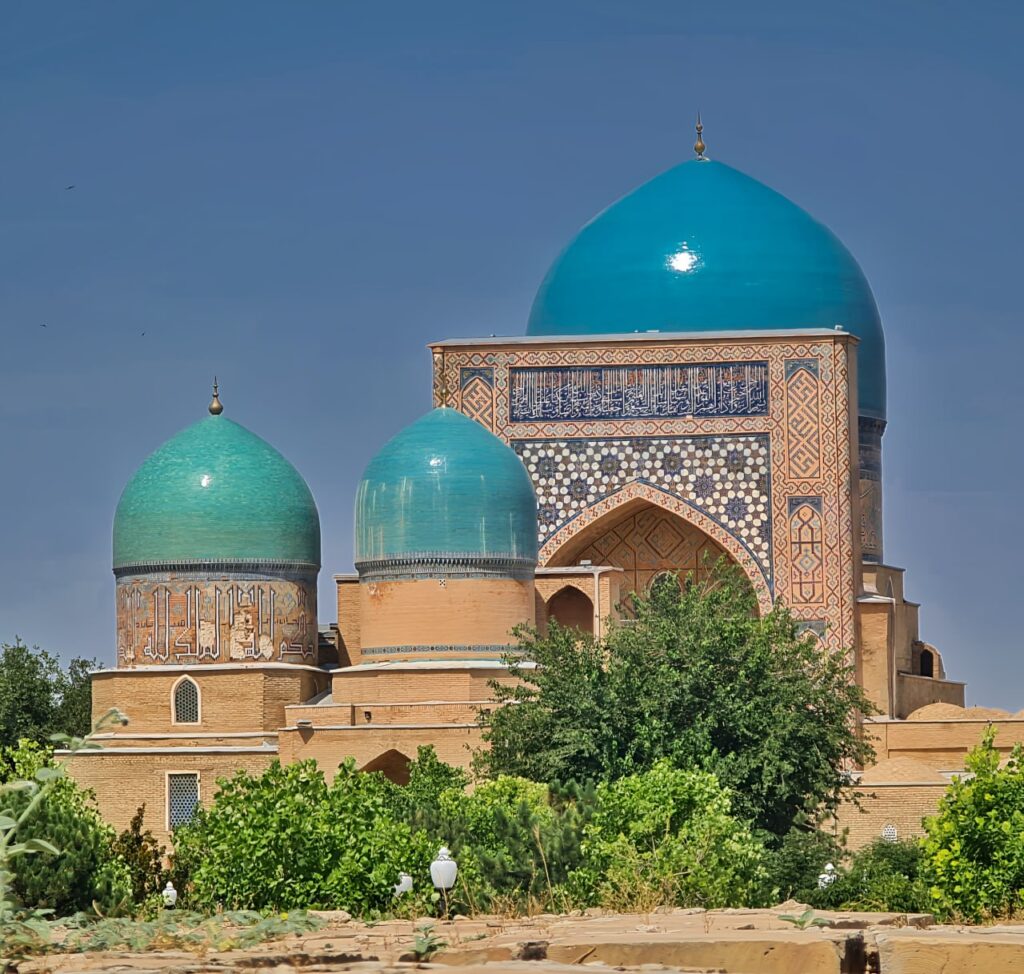
Shahrisabz, known in ancient times as Kesh, was probably founded in the 3rd century BC. Timur, the later ruler of Transoxiana, was born here in 1336. He planned to develop Kesh, instead of Samarkand, into the capital of his empire and commissioned buildings of some monumental dimensions.

Today in Shahrisabz, we visit the Dorut Tilovat complex, including the Kok Gumbaz Mosque (1435). The inscription in the portal testifies that it was built by Ulugbek in the name of his father, Shakhrukh. We then visit the Darus-Saodat complex, including the Jahangir Mausoleum (1379/80). Timur’s son Jahangir fell from his horse at the age of 12 and died. In the afternoon, we continue to Samarkand. Arrival in Samarkand. Dinner with an Uzbek family. Overnight at the hotel.


Day 9: Samarkand.

Samarkand is the second-largest city in Uzbekistan, the center of the Samarkand region. Today, Samarkand is primarily known for its many mosques and mausoleums. Currently, the city has a population of approximately 520,000, mainly Tajiks, Uzbeks, Russians, Jews, and Iranians.

Sightseeing in Samarkand

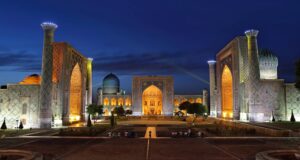
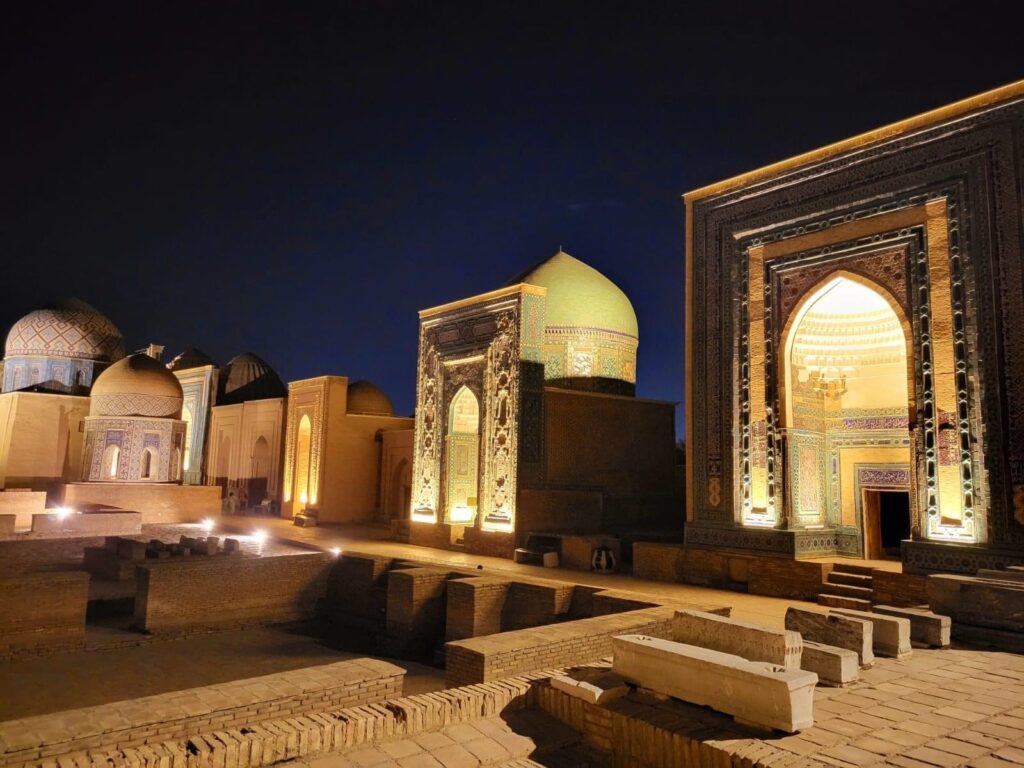
The Gur-Emir Mausoleum (15th century), translated as «Tomb of the Lord,» was built between the late 14th and mid-15th centuries as a burial site of the Timurids. Registan Square is the most famous symbol of Uzbekistan. The three Koranic schools – Ulugbek Madrasa (15th century), Tilla Kori Madrasa (17th century), and Sher Dor Madrasa (17th century) – still characterize the Registan today. The Bibi-Khanym Mosque was built by Tamerlane in the 15th century as the largest Friday mosque in Central Asia for his favorite wife.
 

Day 10: Samarkand – Bukhara (270 km)

The Royal Road, the ancient connecting route to Bukhara, begins on the western outskirts of the city. During the heyday of the Silk Road, trade caravans traveled here, reaching Bukhara after a 6-7 day ride. About halfway there, in the middle of the desert, stands a monumental gate that seems to lead into nowhere. It is the last remnant of a Rabat-i-Malik caravanserai, and the ancient Silk Road ran right through it. Near the caravanserai lies Sardoba, a water cistern that once served as a refueling station for the caravans. Continue to Bukhara. Dinner. Overnight at the hotel.

Day 11: Bukhara

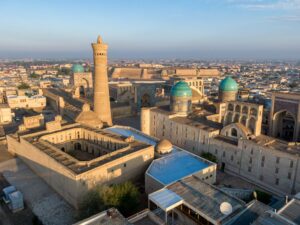
Bukhara – in this 2,500-year-old oasis city, we experience the full fascination of the Orient: mosques with luminous domes, Koranic schools, and caravanserais. The intact old town resembles an open-air stage, transporting us to the adventures of 1001 Nights. We visit the Samanid Mausoleum, arguably the oldest magnificent tomb

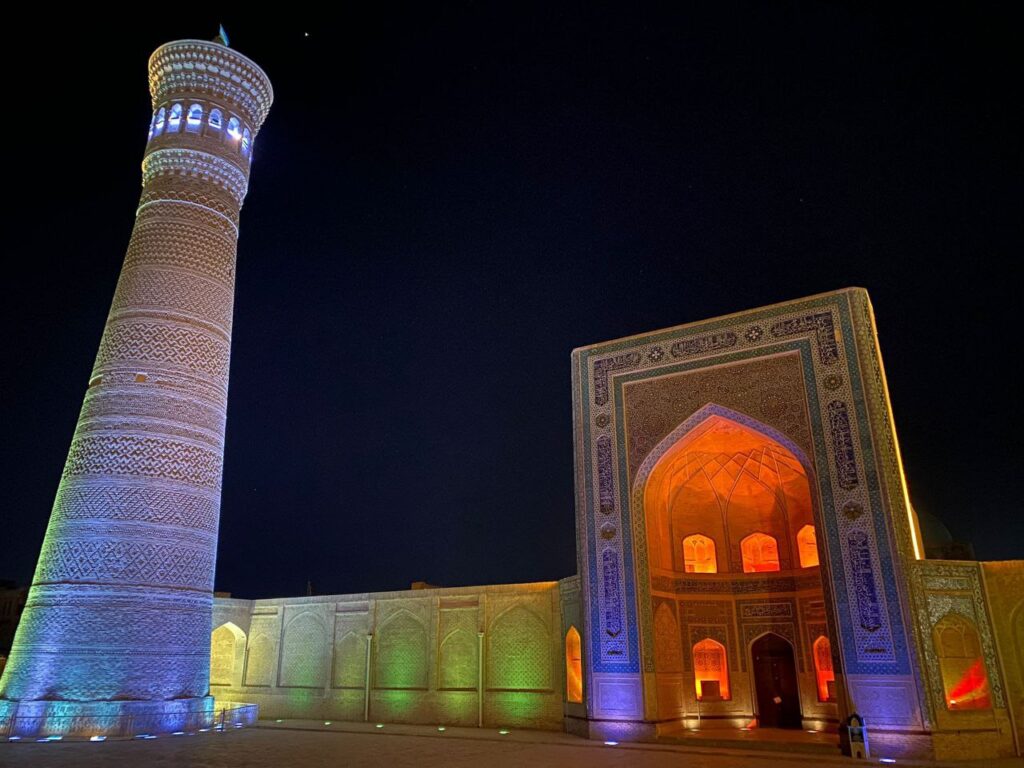
in the Islamic-Oriental world. The ruler Ismail Ibn Ahmad presumably rests beneath the masterful 9th-century dome. The Chashmai Ayyub Mausoleum was built where the prophet Job is said to have carved a spring from the rock. We continue to the Ark Fortress high on the mountain, the small Bola Xaus Mosque, and the Kalon Mosque. The Labi Xaus complex is grouped around a large pool. A special attraction are the domed bazaars, bustling with activity: beneath the artisan vaults, you can hear the hammers of shoemakers and scissors makers, while the jewelers’ shops, perfume, fabric, and hat sellers overflow with wares.

Day 12: Bukhara – Khiva (450 km)

After breakfast, we drive along the ancient Silk Road through the Kyzylkum Desert, one of the largest desert landscapes in Central Asia. Along the way, we take a break near the Amu Darya River, which once flowed into the Aral Sea. At the edge of the desert, we see vast cotton and vegetable fields.

Our destination is Khiva, once one of the richest trading cities on the Silk Road (UNESCO World Heritage Site).

Day 13: Khiva

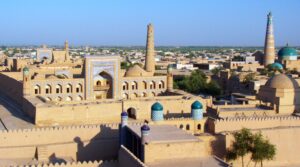
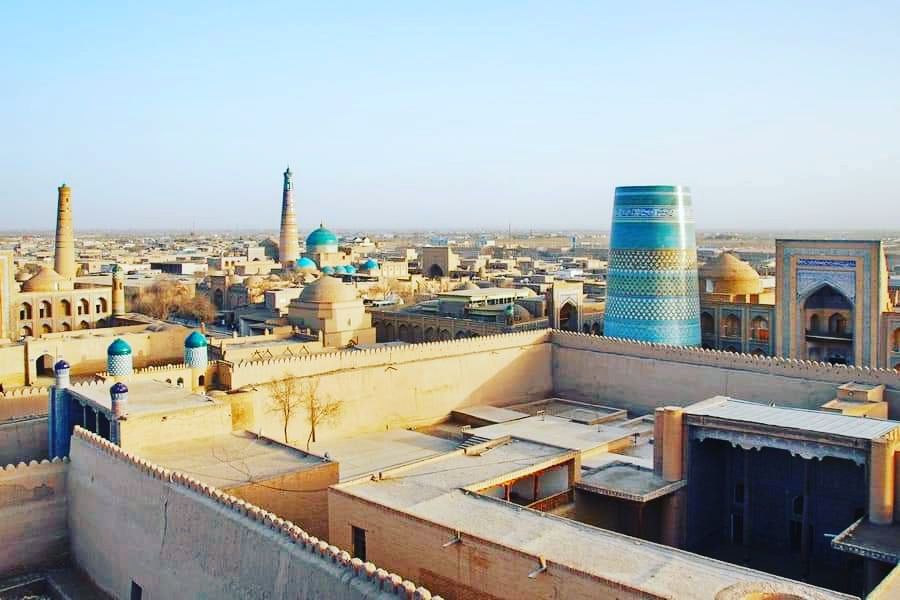
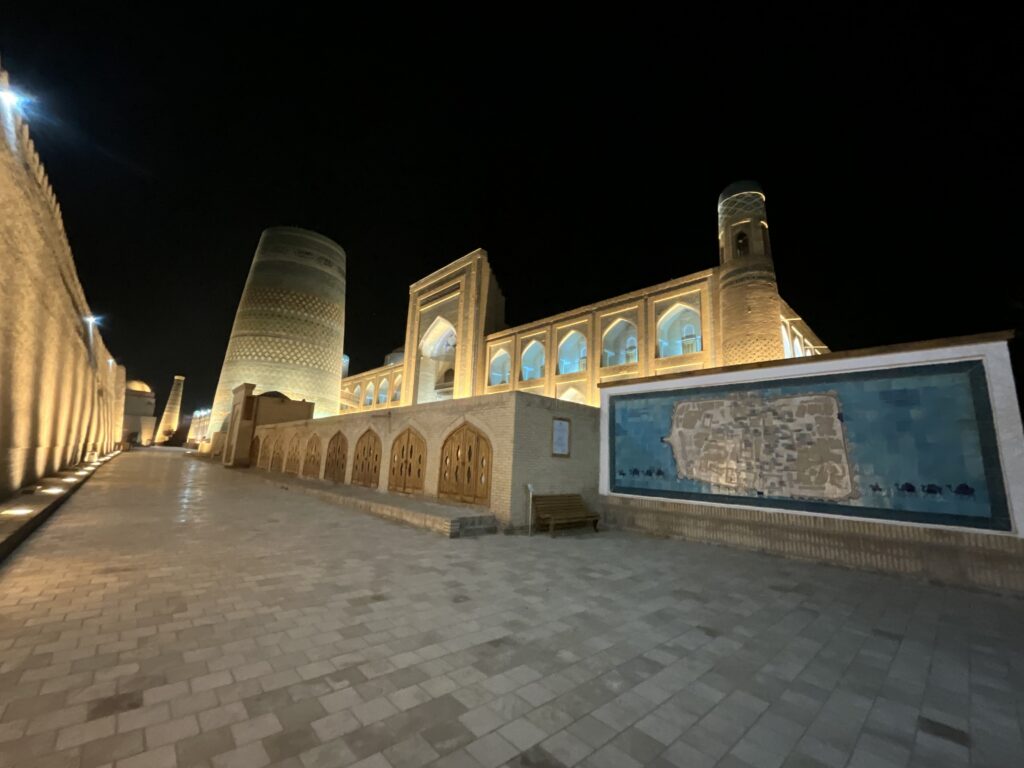
Khiva – the capital of the Turkic world. Khiva is the most beautiful oasis city in Uzbekistan, with ancient museums, minarets, and unique mud buildings. At the 11th session of the Organization of Islamic Cooperation (OIC) in Baku, Khiva was declared the tourist capital of the Islamic world in 2024.

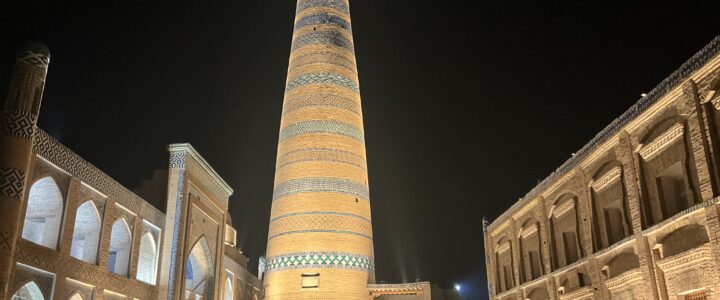
Sightseeing in Khiva: The Juma Mosque (1788/89) has a tall minaret topped with a narrow belt of blue glaze. Originally, there were 212 pillars supporting the ceiling. The Pakhlavon Mahmud Mausoleum. Pakhlavon Mahmud (1247-1325), as his surname suggests, was a furrier. A domed mausoleum was built over his grave. The Islam Khodja Minaret and Madrasa, both built at the beginning of the 20th century, is the last major project to be built in the Central Asian khanates. The Kalta Minor and the Madrasa of Muhammad Amin Khan, both built in the mid-19th century. Further sightseeing.
 

Day 14: Khiva

Further sightseeing in Khiva: Kohna Ark Citadel, the Tash Hauli Palace, the Allakuli Khan Madrasa and Caravanserai, and the

Nurullabay Palace. Free time in the afternoon.

Day 15: Khiva – Dashoguz – Konya Urgench – Darwaza (Turkmenistan).

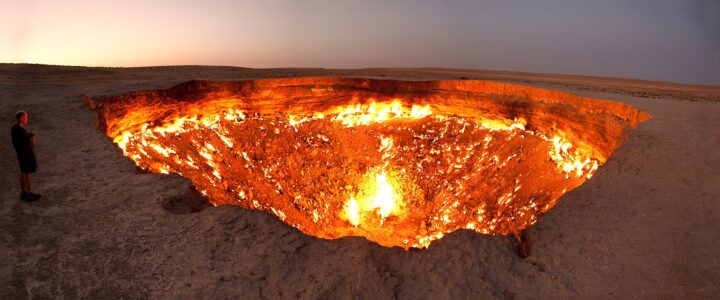
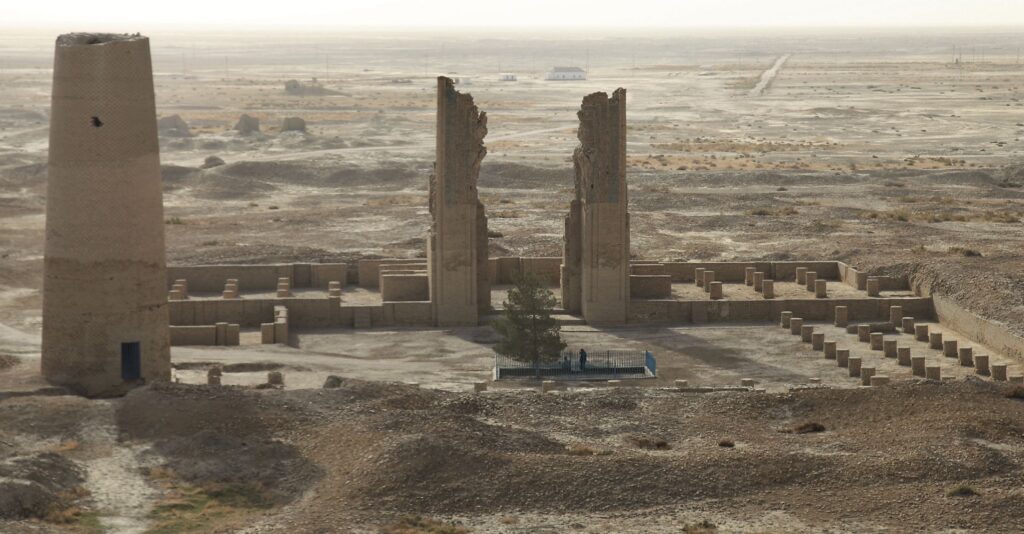
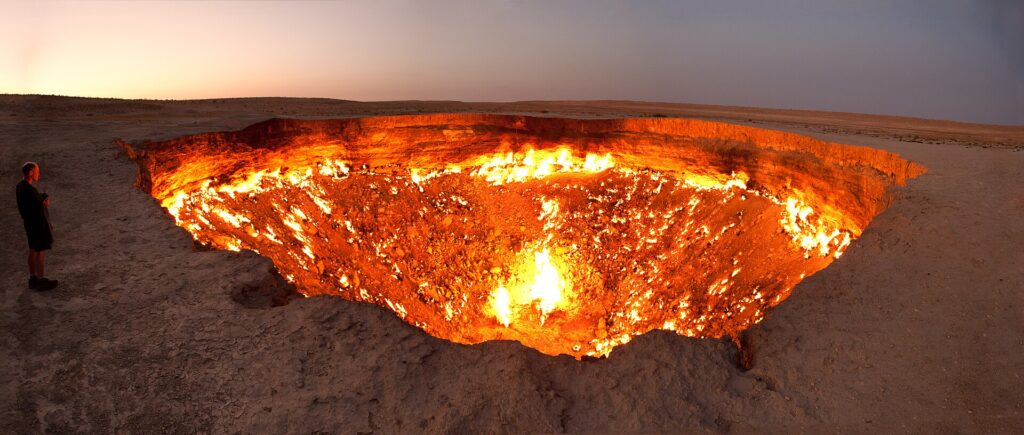
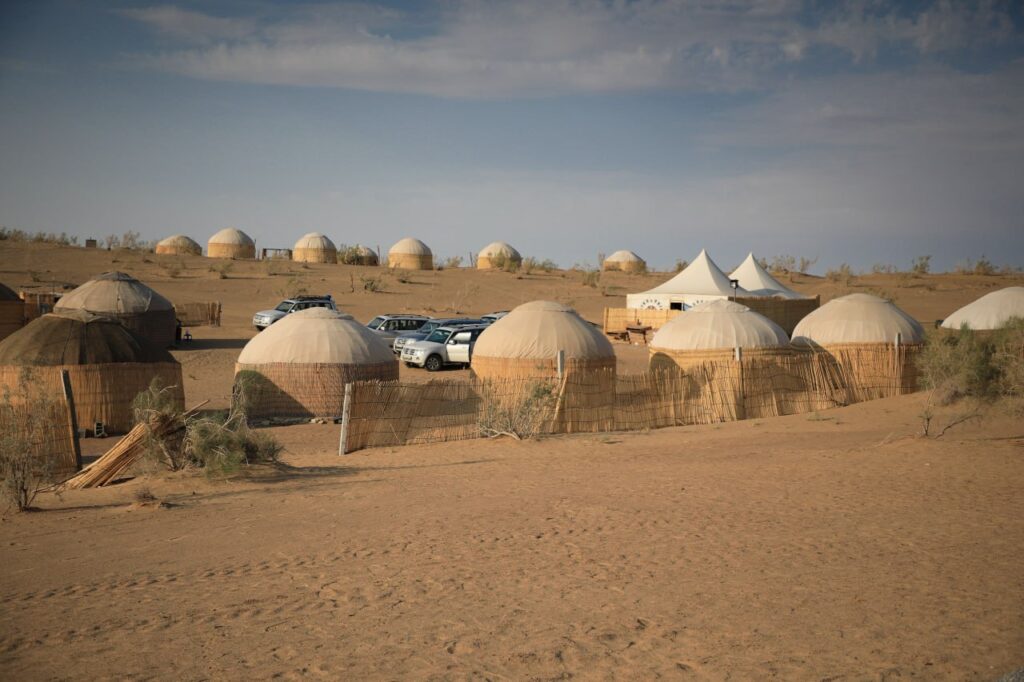
Transfer to the Uzbek-Turkmen border. Arrival at the Uzbek-Turkmen border from Dashoguz. Transfer to Konya Urgench. Visit Konya Urgench: Turabeg Khan Mausoleum, Kutlug Temur Minaret (62 meters), Sultan Tekesh Mausoleum, II Arslan Mausoleums, and Kirkmolla Mound (Mound of the Forty Mullahs). Continue to Darwaza (Gaz Crater), the «famous Gate of Hell.» Upon arrival in Darwaza, visit the gas crater. Dinner (picnic barbecue) and overnight in a tent near the gas crater.

Day 16: Darwaza – Ashgabat (250 km)

After breakfast, continue to Ashgabat through the Karakum Desert, stopping in the villages. Arrive in Ashgabat and check in at the hotel. Visit the Turkmen Horse Monument, the Arch of Neutrality, the Independence Monument, and the Ertogul Gazy Mosque. Stay overnight at the hotel.

Day 17: Ashgabat – Merv

Breakfast at the hotel. Transfer to the airport for the flight from Ashgabat to Merv. Arrive in Merv and continue to Merv (35 km). Visit ancient Merv, the «Pearl of the Orient,» or ancient Margiana. Margouch, the capital of the Seljuk Turks during the time of Alexander the Great, is one of the oldest and best-preserved oasis cities on the ancient Silk Road. Visit the koshks (fortresses) of Kyz Qala, the Qala Askhab complex, the Giaur Qala fortress, the Sultan Sanjar Mausoleum, the largest structure in medieval Central Asia, and Erk Qala, a 6th-century Achaemenid city with its city walls. Overnight at the hotel in Merv.

Day 18: Merv – Bukhara (Uzbekistan)

Transfer to the Turkmen-Uzbek border. Continue to Bukhara. Arrival and accommodation at the hotel.

Day 19: Bukhara – Tashkent (train) (600 km)

Today we have the entire morning at leisure in Bukhara, and in the afternoon we travel by express train «Afrosiyob» to Tashkent.

Day 20: Tashkent – ​​Germany

Transfer to Tashkent International Airport and flight to

Germany.

Price in euros per person:

€2,945 (5 to 9 guests)

€2,725 (10 to 16 guests)

Single room supplement: €390

Services included

Uzbekistan

Hotel accommodation with breakfast

Tour guide

Transportation

Train from Bukhara to Tashkent

All entrance fees

Dinner

Turkmenistan

Hotel accommodation with breakfast

Letter of invitation

Registration in the city of Ashgabat

Dinner

Barbecue dinner and picnic breakfast at Darwaza.

Tour guide

Transportation

Domestic flight Ashgabat — Mary

Tourist tax

Tajikistan

Hotel accommodation with breakfast

Transportation

Dinner.

Tour guide

All entrance fees

Visa support for Tajikistan

Not included in the price.

International Flight Tickets

Lunch

Alcoholic Beverages

Travel Insurance

Gratuities

Visa fee for Turkmenistan (currently, it costs $70 to $100 depending on how many days you stay in the country). PZR test for Turkmenistan (currently, $33)

Hotels

Uzbekistan:

Tashkent – ​​Hotel Unique, MaxWell Hotel & Spa, or similar

Shahrizabz – Kesh Palace

Khiva – Hotel Darvaza, Hotel Grand Vizir, or similar

Bukhara – Hotel Al-Malik, Hotel Komil Boutique, or similar

Samarkand – Hotel Malika Prime, Hotel Konstantin Plaza, or similar

. Turkmenistan

Sport Hotel 4* — 1 night

Mary Hotel 4* — 1 night

Tent stay (yurt overnight stay) in Darwaza.

Tajikistan

Dushanbe — Serena or Hilton Dushanbe Hotel 5*

Pendjikent — Pandjikent Plaza or Rudaki 3*

Khujand — Khudjand Deluxe or Parliament 4*.
Kyrgyzstan & Kazakhstan — combination trip

Kyrgyzstan & Kazakhstan — combination trip

Itinerary

Day 1: Bishkek

Flight via Istanbul to the Kyrgyz capital, Bishkek. Upon arrival in Bishkek, you will be met at the airport by your tour guide and driver and transferred to your hotel for the night. Overnight at the 4* Hotel Damas


Day 2: Bishkek – Ala Archa National Park – Bishkek

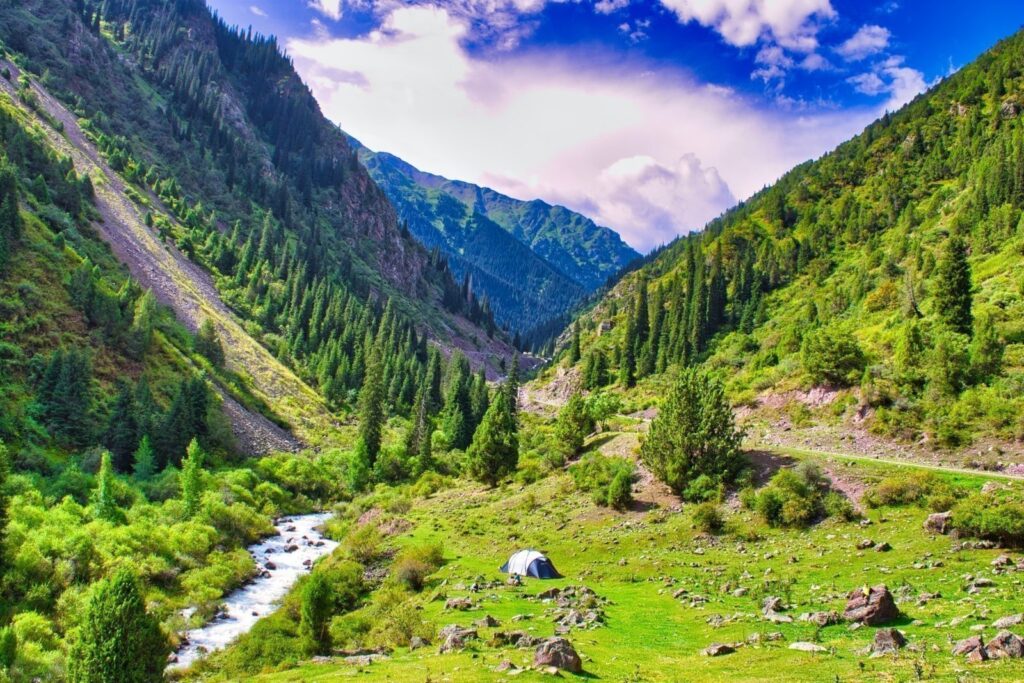
After breakfast, transfer to Ala Archa National Park. Take a pleasant walk along the river and admire the breathtaking Tian Shan Mountains.

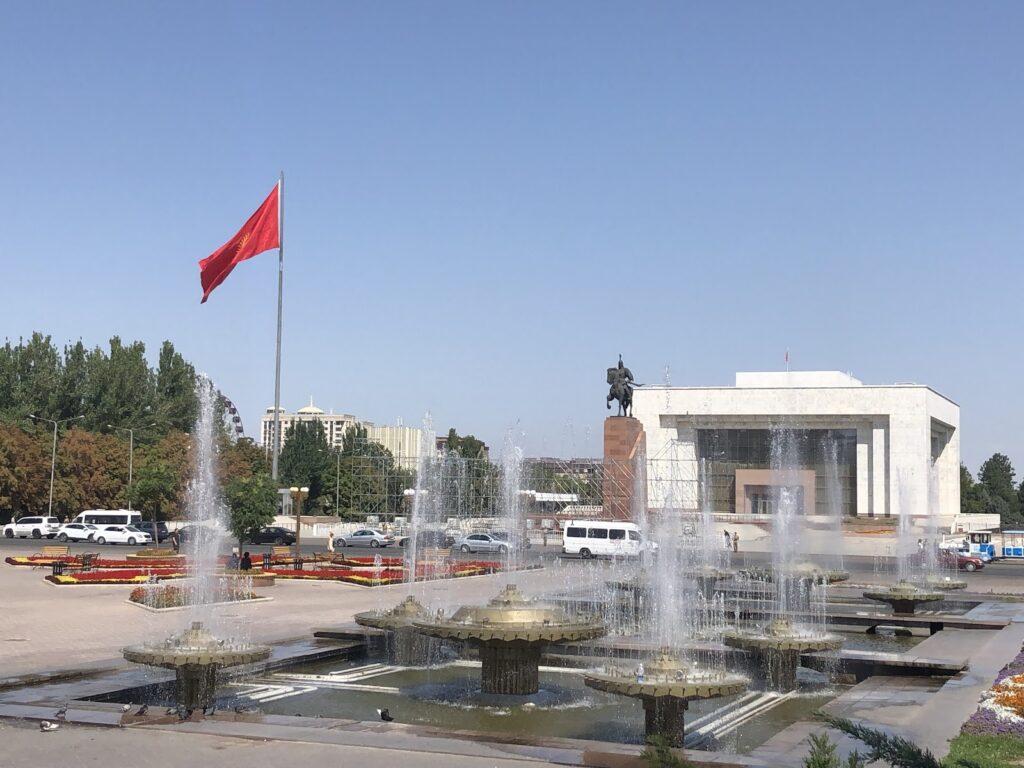
Return to the city and visit the Historical Museum, Ala Too’s main square with the Manas Monument, Oak Park, and the Old Square.

Overnight at the Damas Hotel 4*


Day 3: Bishkek – Chon Kemin (180 km)

After breakfast, continue to the Chon Kemin Valley. En route, visit the ancient settlement of Balasagun with the Burana Tower. Burana also houses a museum with important archaeological finds that document the history of the Silk Road and Kyrgyzstan.

After arriving in Chon Kemin, you have free time.

Overnight at the Ashu Guesthouse.

Day 4: Chon Kemin – Cholpon Ata (180 km)

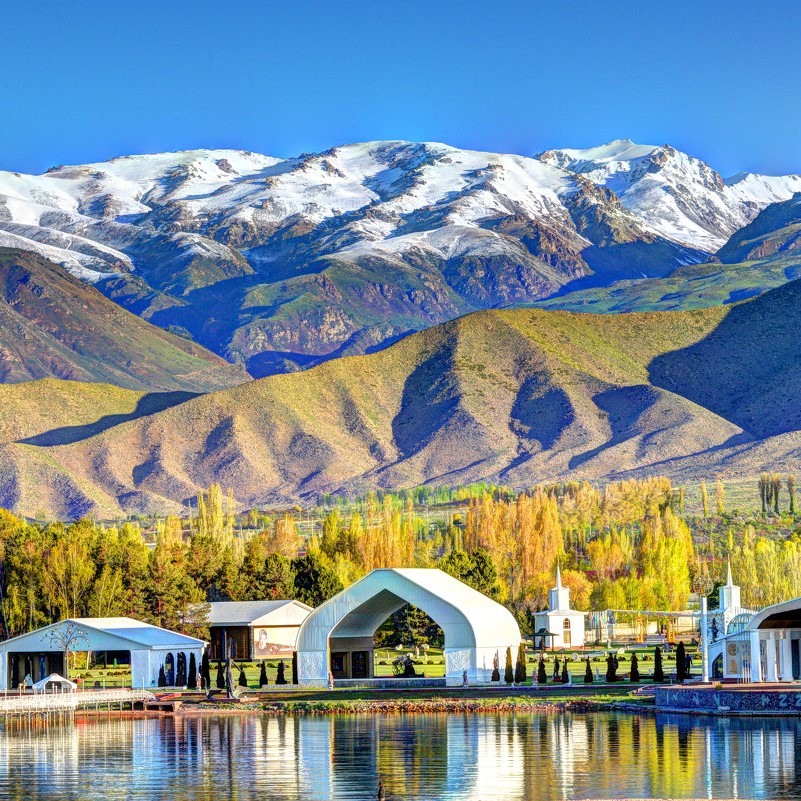
After a restful morning and breakfast, you begin your journey to the northern shore of Lake Issyk-Kul. The pearl of the Tien Shan, Issyk-Kul is the largest lake in Kyrgyzstan. Issyk-Kul means «hot lake.» The water temperature here never drops below zero, even in winter, so the lake never freezes over. After arrival, enjoy a relaxing evening by the lake. Visit the open-air museum with petroglyphs – paintings on rocks.

Overnight at the Caprice Hotel or similar.


Day 5: Cholpon Ata – Karakol

In the morning, drive to Karakol via the Grigorievskoe and Semenovskoe Gorges.

Upon arrival in Karakol, visit the Dungan Mosque and the Orthodox Church.

Overnight at a hotel. Green Yard or similar.

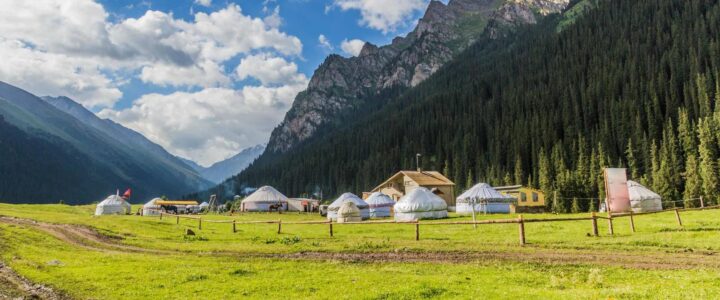
Day 6: Karakol After a restful morning, you will travel by off-road vehicle to the Altyn-Arashan Gorge. It lies in a postcard-perfect valley at 3,000 meters above sea level.

The road is not easy, very steep in places, and requires special four-wheel drive vehicles.

Enjoy your time in the gorge.

Return to Karakol. Overnight at the hotel. Green Yard or similar.


Day 7: Karakol – Tosor (180 km)

After breakfast, you begin your journey to Tosor via the southern shore of Lake Issyk-Kul. Visit the Jety Oguz Gorge with the «Broken Heart» and «Seven Bulls» mountain formations.

After arriving in Tosor, you will visit the Skazka Gorge. The wind has polished natural and fabulous sculptures here over the years. One of the most famous rocks is the «Great Wall of China.» It was named so because of its resemblance to the famous architectural monument of China.

Overnight at the Royal Gate Yurt Camp.

Day 8: Tosor – Naryn (300 km)

In the morning, drive to Naryn. Naryn is the administrative center of Naryn Province, the largest and most mountainous province in Kyrgyzstan. Upon arrival, you will visit the so-called «Blue Mosque» and the local museum.

Overnight at the guesthouse. Kezgin Guesthouse.

Day 9: Naryn – Tash Rabat – Naryn (220 km)

After breakfast, drive to the Tash Rabat Caravanserai. This is a carefully restored stone building that once housed an inn on the Great Silk Road. Its date of construction is unknown, but archaeological evidence suggests that the site was inhabited in the 10th century.

After an excursion and a walk through the gorge, drive back to Naryn.

Overnight at the guesthouse. Kezgin Guesthouse

Day 10: Naryn – Son Kul Lake (150 km)

After breakfast, we drive to Son Kul Lake. This is the second largest lake in the country after Issyk-Kul. The lake lies in the gorges of the Tien Shan at an altitude of 3,016 meters above sea level.

Evening at leisure at the lake.

Overnight in yurts.

Day 11: Son Kul – Kyzyl Oi (200 km)

After a restful morning and breakfast, we drive over the Kara Keche Pass to the village of Kyzyl Oi. The evening is at leisure in the village.

Overnight in a private accommodation.

Day 12: Kyzyl Oi – Bishkek (200 km)

After breakfast, we drive over the Too Ashuu Pass to Bishkek.

After arriving in Bishkek, we visit the Osh Bazaar.

Overnight at the Damas 4* Hotel.

Day 13: Bishkek – Almaty (300 km)

After breakfast, you begin your journey to Almaty, Kazakhstan. Customs formalities at the Kordai border.

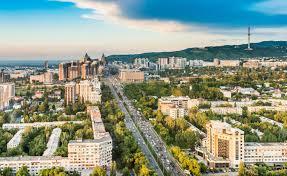
After arriving in Almaty, you visit Kok Tobe Hill with panoramic views of the city of Almaty.

Overnight at the Kazzhol 4* Hotel.

Day 14: Almaty

After breakfast, visit the Medeo and Shymbulak ski resorts. Take the cable car to the Talgar Pass at 3,200 meters.

In the afternoon, visit the Historical Museum, Panfilov Park with the Zenkov Cathedral, and the Green Bazaar.

Overnight at the 4* Hotel Kazzhol.


Day 15: Almaty – Charyn Gorge – Kolsai Lake (300 km)

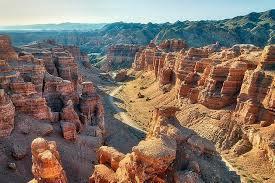
In the morning, you begin your journey to the Charyn Gorge. This picturesque, indigenous village impresses with its heavenly landscapes. The canyon itself is a natural monument formed from sedimentary rocks more than 12 million years old.

After the excursion, we drive to the village of Saty.

Overnight in a private accommodation


Day 16: Kolsai Lake

Full day at Kolsai Lake. The Kolsai Lakes in Kazakhstan are also called the «Blue Necklace» of the Northern Tien Shan, and anyone who sees these natural beauties will quickly understand why. When the water’s surface is completely calm, the sky is reflected in it.

Overnight in a private accommodation.

Day 17: Saty – Basshi (350 km)

After breakfast, we drive to the village of Basshi. Stop in Chunzha for lunch.

Overnight in a guesthouse. Aigaikum Guesthouse.

Day 18: Basshi – Almaty (280 km)

In the morning, we visit the Singing Dunes. The Barkhan has a crescent shape, which makes it uniquely beautiful. When the wind blows from the west and stirs up the sand, it feels like a pipe organ is playing in the heart of the desert.

After the excursion, we travel to Almaty.

Overnight at the 4* Kazzhol Hotel.

Day 19: Almaty – Airport

After breakfast, check-out and transfer to the airport.

Price: €2,235 per person

Participants: 8-10

Included services:

German-speaking tour guide throughout

All transfers and transportation during the tour in comfortable, air-conditioned vehicles.

All overnight stays in the mentioned or equivalent hotels in standard rooms.

Daily breakfasts and dinners.

1 liter of water per person per day.

2 lunches on days 10 and 11 of the tour.

Entrance tickets and eco-fees.

Special transportation to Altyn Arashan in Kyrgyzstan and the Singing Dunes in Kazakhstan.

Not included in the price:

Personal expenses

Lunch

International airline tickets

Tips.


15-day round trip

15-day round trip

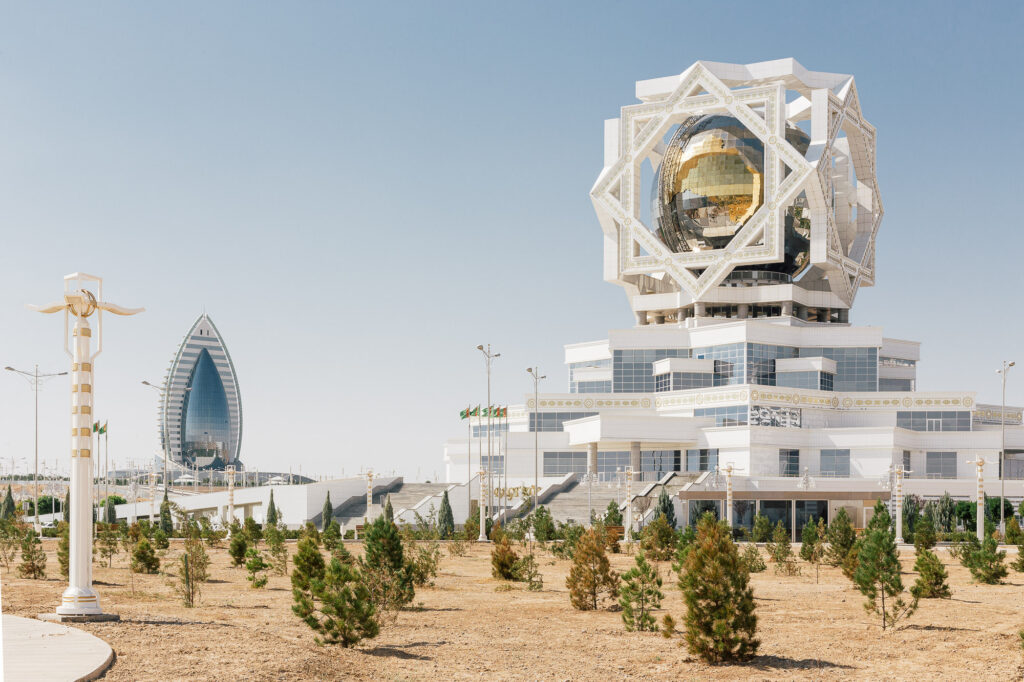
Day 1: Ashgabat. Arrival in the Turkmen capital of Ashgabat. You will be picked up by our tour guide and transferred to your hotel (early check-in). Free time. In the morning, drive to Nissa Fortress – the sanctuary of the Parthian kings. UNESCO declared the fortress a World Heritage Site in 2007. Nissa was one of the first capitals of the Parthians. It was founded by Arsaces I (reigned c. 250 BC – 211 BC) and is reputedly the royal necropolis of the Parthian kings. However, there is no evidence that the fortress in Nissa was either a royal residence or a mausoleum. The ruins of the ancient settlement of Nissa are located 18 km from Ashgabat in the village of Bagyr. Drive to visit the Turkmenbashy Ruhy Mosque in Kipchak (the largest mosque in Central Asia). Afterwards, enjoy a city tour of Ashgabat. You’ll see the Wedding Palace, the modern Yildyz Hotel, the Ferris wheel, the Constitution Monument, the Arch of Neutrality, the Independence Monument and Park, the Ertogrul Gazy Mosque, the Ashgabat Olympic Stadium, and the Halk Hakydasy Memorial Complex. Overnight at the hotel.

Day 2: Ashgabat – Nokhur Village. Breakfast at the hotel. Drive to Gokdepe Fortress (50 km, 50 min), which was attacked by the Russian Empire in December 1880. The siege of Gokdepe lasted 23 days, after which the city was taken by storm. Visit the Geokdepe Mosque (Saparmyrat Hajy), built in 1995 to commemorate the defeat and famous for its mint-turquoise roof and white marble structure. Then drive to the horse farm to see the national pride of the Turkmen people – the Achalatka horses, the most beautiful horses in the world. 5,000 years ago, the Turkmen began breeding Achalatka horses. This unique breed has never been mixed with other breeds. Famous emperors such as Alexander the Great and Darius I desired to own Achalatka horses. The farm is home to over 35 beautiful horses. According to superstition, any sick person who touches an Ahalteke horse will soon recover. Later, we drive to the mountain village of Nokhur (72 km, 1 hour). The village itself is located in a small valley in the Kopet-Dag Mountains. Except for the main road through the middle of town, the streets are so narrow that barely a car can pass between the high stone walls on either side. The Nokhur people who inhabit this remote mountain village are very different from other Turkmen tribes. Legend says this was the place where Noah’s Ark was moored, all the animals were let out, and various seeds were planted. Indeed, the nature of Nokhur differs from the surrounding villages. Visit the large tree and one of the unique, isolated cemeteries. Almost every grave is marked by a wooden post decorated with the horns of a mountain goat. Fulfill your sacred wishes by visiting a wishing tree named after Kyz Bibi. Overnight in Nokhur.

Day 3: Nokhur Village – Sumbar Valley – Dehistan. Breakfast at the guesthouse. In the morning, drive to Dehistan (409 km, 8 hours) through the Sumbar Valley. Dehistan boasts picturesque towers of ancient settlements and monuments from the 10th to 12th centuries, as well as the oldest mosque from the early Islamic period, which stands on the ancient burial site of Mashad. This town is probably the most remote and isolated. It was once a thriving medieval city on the caravan routes between Khorezm and Persian Hyrcania. Overnight at a camp near Dehistan.


Day 4: Dehistan – Balkanabat – Yangykala. After breakfast, we drive to the Yangykala Gorges (356 km, 6 hours), one of Turkmenistan’s most scenic natural monuments. The Turkmen expression «Yangy kala» translates as «fire fortress.» Indeed, the steep cliffs in white, yellow, ochre, purple, and red, artfully shaped by wind and rain, closely resemble stone castles from a fantasy world. Explore the gorges. Overnight in the gorge.

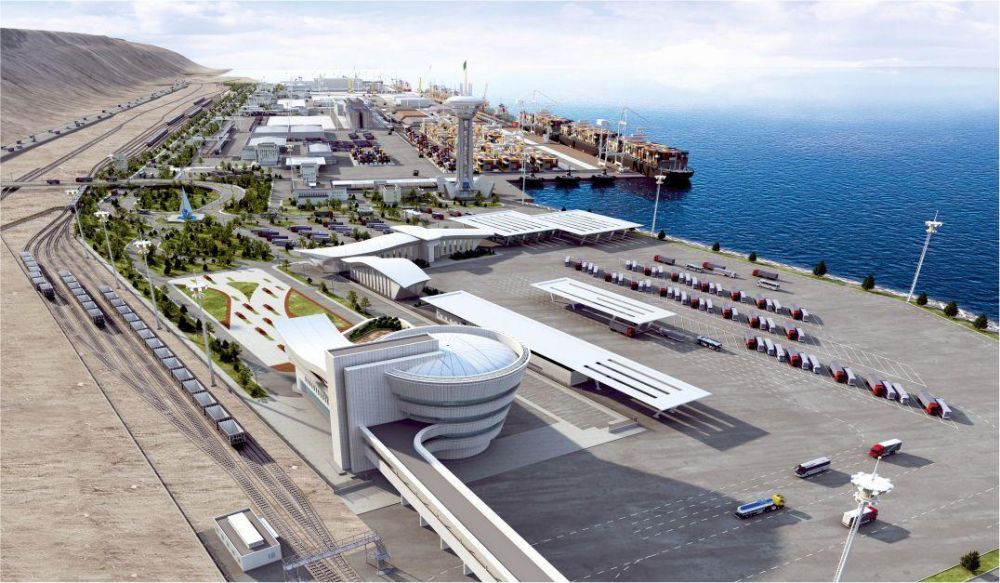
Day 5: Yangykala – Turkmenbashi. Picnic breakfast in the canyon. Drive to Turkmenbashi (181 km, 3 hours). On the way to Turkmenbashi, visit Gozli Ata. Embark on a fascinating city tour of Turkmenbashi, the vibrant port city on the Caspian Sea, formerly known as Krasnovodsk. Immerse yourself in the city’s rich history, vibrant culture, and stunning natural beauty. Venture into the Old Town, where charming Soviet-era architecture blends seamlessly with traditional Turkmenistan. Explore the lively bazaars where you’ll find an abundance of fresh produce, local handicrafts, and spices. At sunset, watch the mesmerizing spectacle of the Caspian Sea glowing in hues of orange and pink. Enjoy the tranquility of the waterfront as the day draws to a close. Overnight in Turkmenbashi.


Day 6: Turkmenbashi – Ashgabat – Mary. Transfer to Turkmenbashi International Airport for a flight to Ashgabat. Upon arrival at Ashgabat International Airport, meet your driver. Then drive to Mary (389 km, 4 hours). You will also see the ruins of the Seyitjemaleddin Mosque in Anau. The mosque was built in 1456, when Abu ibn Kasim Baber Bahadurkhan ruled Khorasan (1446-1457). The construction of the mosque was financed by Bahadurkhan’s vizier, Muhammed Hudaidot, who also chose a site near the tomb of his father, Sheikh Jemaleddin, a native of Anau. The square central hall (with sides measuring 10.5 meters) was crowned with a dome. In later periods, the Seyitjemaleddin Mosque was partially reconstructed. By the 19th century, the building had already been severely damaged by the earth, and it was completely destroyed in the 1948 Ashgabat earthquake. Today, only the lower parts of the portal and some fragments of the walls remain. Along the way, visit Abiverd, once an important trading town in northern Khorasan. It was a key link on the Great Silk Road between Nisa and Merv and also had connections to Nishapur, beyond the Kopetdag Mountains to the south. You’ll then see all the important buildings in downtown Mary. Also visit the Mary Bazaar to see a variety of local products and the Russian Orthodox Church (one of the oldest in Turkmenistan). Overnight in Mary.

Day 7: Mary – Gonurdepe – Merv – Turkmenabat. Breakfast at the hotel. Drive to Gonurdepe (105 km, 3 hours). Gonurdepe was the capital of the Margush region (Margiana), which covered an area of ​​more than 3,000 km² and consisted of 78 oases and more than 150 compact settlements. The American newspaper «Boston Globe» wrote that we previously knew of the four oldest centers of world civilization: Egypt, India, China, and Mesopotamia, and that today, based on the fantastic findings of the Margiana expedition, it is quite possible to assume that there was another, a fifth center. Then, drive to Merv (82 km, 2 hours) to explore ancient Merv—the «Queen of the World,» which, along with Baghdad, Cairo, and Damascus, was one of the most important capitals of Islam. Visit ancient Merv: Great Kyz Gala and Small Kyz Gala (6th-7th centuries), the Askhab Complex (8th-14th centuries), Erk Gala (6th BC), Gyaur Gala (4th BC), the Hoja Yusup Hamadani Complex, the Sultan Sanjar Mausoleum, and the Muhamed Ibn Zeid Mausoleum. After the tour, travel to Turkmenabat (230 km, 4 hours). Overnight at the hotel.

Day 8: Turkmenabat – Dayahatyn – Turkmenabat. Breakfast at the hotel. In the afternoon, enjoy an unforgettable day trip to the Dayahatyn Caravanserai, a UNESCO World Heritage Site located 170 km north of Turkmenabat. This magnificent 16th-century structure served as a rest stop for traders and caravans traveling along the Silk Road. As the sun sets, bid farewell to the Dayahatyn Caravanserai, a monument to the rich history and enduring legacy of the Silk Road. Take with you precious memories of this remarkable place and the stories hidden within its walls. Overnight at the hotel.

Day 9: Turkmenabat – Koyten Village. Breakfast at your hotel in Turkmenabat. Then, meet your driver and set off for Koyten Village (378 km, 6 hours). Along the way, stop at the Astana Baba and Alamberdar mausoleums, both UNESCO World Heritage Sites dating back to the 11th century. Admire the intricate architecture and tranquil atmosphere of these revered sites. Continue your journey with a refreshing break at Gaynar Baba Lake, a picturesque oasis nestled among the mountains. Breathe in the fresh air and enjoy the tranquility of the surroundings. Upon reaching the village of Koyten, check into your cozy guesthouse and immerse yourself in the authentic Turkmen charm of the village. Take a walk through the village and around the famous Kette Kol Lake, observe the daily life of the villagers, and witness their traditional customs. Overnight at the guesthouse.

Day 10: Exploring the Koytendag Valley. Start your day with a hearty breakfast at your guesthouse and prepare for an adventure in the mesmerizing Koytendag Valley. Embark on a morning drive to the famous Dinosaur Plateau, a fascinating geological wonder that reveals the story of prehistoric giants. Explore the plateau and marvel at the abundance of dinosaur footprints preserved for over 145 million years. Imagine the colossal creatures that once roamed this land and left their indelible mark on the terrain. Enjoy a delicious lunch on the Dinosaur Plateau and taste the flavors of the region while surrounded by the impressive landscape. Travel to the enigmatic Kyrk-Gyz Cave, a place steeped in local legends. Delve into the cave’s depths and discover the stories of forty maidens who sought refuge within its walls. Immerse yourself in the unique tradition of goat massage, a local practice known for its therapeutic effects. Experience the agility of the goats as they climb over your back and give you a gentle massage with their feet. Continue your journey to the enchanting Umbar-Dere Waterfall, a cascading oasis amidst the rugged terrain. Be overwhelmed by the tranquility of the waterfall as you enjoy the natural beauty. Spend the night at the guesthouse.

Day 11: Koyten – Kerki – Ashgabat – Darvaza. Breakfast at the guesthouse, then drive to Kerki (183 km, 3 hrs) and fly to Ashgabat at 1:00 PM (no flights on Tuesdays and Thursdays). Meet your driver upon arrival at Ashgabat International Airport. Drive to the burning Darvaza gas crater (276 km, 4 hrs), one of the most popular international tourist destinations. The area is rich in natural gas. The Darvaza gas crater, which has been burning for over 50 years, glows like a pearl in the Karakum Desert. In addition to the Darvaza gas crater, you will also see water and mud craters. One of the most vivid and fascinating features of this trip is the fresh desert air and the close experience of nomadic life. At night, as the light from the gas crater hits the sky, you will camp in a Turkmen national yurt or in private tents and enjoy a barbecue for dinner. This unique landscape will fascinate you and you will want to come back.


Day 12: Darvaza – Dashoguz Picnic breakfast in Darvaza. Morning drive to Dashoguz (297 km, 6 hours). Embark on a fascinating city tour of Dashoguz, the capital of Turkmenistan’s Dashoguz province. Nestled on the country’s northern plains, Dashoguz is a vibrant city brimming with historical treasures, cultural attractions, and natural wonders. At the end of your city tour of Dashoguz, you’ll take home memories of a city that seamlessly blends ancient heritage with modern aspirations. Dashoguz is a place where history whispers through the cobblestone streets, where culture bursts from the bazaars, and where nature reveals its striking beauty. Whether you’re seeking historical insight, cultural immersion, or natural wonders, Dashoguz will undoubtedly leave a lasting impression on your Turkmenistan trip. Overnight at the hotel.

Day 13: Dashoguz – Kunya Urgench – Dashoguz – Ashgabat. Breakfast at the hotel. After breakfast, drive to Kunya Urgench (94 km, 1 hour). Sightseeing tour in Kunya Urgench: Visit the Caravansaray Gate, the Mamun Minaret, the II Arslan Mausoleum, the Sultan Tekesh Mausoleum, the Horezm Academy, the Kutlug Timur Minaret, and the Turabek Khanum Mausoleum. After the sightseeing, transfer to Dashoguz International Airport and fly to Ashgabat.


Day 14: Ashgabat Breakfast at the hotel. In the morning, travel to the oriental bazaar «Altyn Asyr» (open Wednesday, Thursday, Saturday, and Sunday) – Jygyldyk, 20 km north of Ashgabat. It is one of the largest open-air bazaars in the world, filled with colorful carpets, jewelry, rugs, silk, and national Turkmen costumes, as well as animals in another section. Next, visit the Gulistan Bazaar, one of the largest and oldest covered markets and a must-see for every traveler to Ashgabat. The ground floor of the bazaar is dedicated to fresh produce such as fruit, vegetables, meat, fish, and dairy products. Stalls also sell spices, nuts, dried fruits, and other foodstuffs. The second floor of the bazaar features a variety of shops selling clothing and souvenirs. Next, visit the National Museum of History and Ethnography. The museum houses an extensive collection of ancient artifacts from Turkmenistan. More than 500,000 items are on display here. It has nine halls, each dedicated to a specific era or theme. The museum showcases the diverse landscape of Turkmenistan, its flora and fauna, fossils, and rare geological finds. The Hall of Independence illustrates the country’s modern development. The Hall of Ancient History presents a collection of flint tools from the Mesolithic period (50,000 BC) used by primitive peoples in western Turkmenistan, along with Neolithic ceramics and ornaments from the first human settlements along the northern slopes of Kopet-Dag. Continue to the Carpet Museum, one of the finest in Central Asia, featuring designs from the Tekke, Yamud, Sarik, and Khodor tribes. The Turkmen Carpet Museum is one of Turkmenistan’s cultural centers, housing approximately 2,000 carpet exhibits, including rare ones. For example, the museum owns the smallest key-carrying carpet and the world’s largest hand-woven carpet, measuring 301 square meters, which was woven in 2001 and included in the Guinness Book of Records in 2003. Overnight at the hotel.

Day 15: Departure. Transfer to Ashgabat International Airport.


13-day round trip

13-day round trip

Day 1: Tashkent Flight to the Uzbek capital, Tashkent. Arrival in Tashkent, transfer to the hotel. Overnight at the hotel.

Day 2: Tashkent Tashkent has a history spanning over 2,200 years. Tchach (the city’s former name) was an important commercial and cultural center in Central Asia and welcomed the caravans of the Silk Road. Under the Khaybanid dynasty, large madrasas and mosques were built in the 16th century; this was the city’s golden age: the Hazrat Imam complex, including the madrasa of Barak Khan (16th century), the ancient Jami Mosque (Friday Mosque), which is still active today, and the mausoleum of Kaffal Chachi – the pilgrimage site with the tomb of a great philosopher, poet, and doctor of Islam who lived in the 10th century; and the Grand Bazaar, Tcharsu, very beautiful and very typical. Tashkent Metro, the first in Central Asia, is distinguished by the fact that each of its stations is decorated by the country’s greatest artists according to a specific theme: cotton, the Uzbek poet Alikher Navoi, etc. Panoramic tour: Amir Temur Square, Independence Square, Theater Square, etc. Overnight at the hotel.


Day 3: Tashkent – ​​Khujand (Tajikistan) Breakfast at the hotel. Transfer to the Tajik-Uzbek border. Customs formalities. Transfer to Khujand. Arrival and sightseeing in Khujand. Khujand is located not far from the Fergana Valley on the Syr Darya River. It is another ancient city with a history dating back to Cyrus the Great of Persia and Alexander the Great. Today, it is the second largest city in Tajikistan and home to the largest market in Tajikistan – Panjshanbe Bazaar. The city tour of Khujand includes the bazaar and the adjacent Maslihaddin Mosque, the Khujand History Museum, and the Arbob Palace. In the evening, we will take a walk in Kmaoli Khujand Park and see the Lenin Statue. Dinner. Overnight at the hotel.

Day 4: Khujand — Istaravshan — Penjikent. From Khujand, we first travel to Istarafshan and then to Penjikent. Istarafshan was founded in the 6th century BC by Cyrus the Great and recently celebrated its 2,500th anniversary. The Timurids of the 14th century then called themselves Istaravshan Ura-Tube, and the city’s artisans were highly respected in Central Asia. Today, Istarafshan is known in Tajikistan for its blacksmiths, who produce, among other things, high-quality knives. We will visit the blacksmiths’ workshops near the market entrance. We continue to Penjikent. The road from Istaravshan to Penjikent is very scenic and crosses the Shakhriston Pass. Arrival in Penjikent. Dinner. Overnight at the hotel.

Day 5: Penjikent – ​​Seven Lakes – Penjikent Breakfast and visit to the remains of ancient Sarazm (5,500 years of history). Archaeological excavations have uncovered traces of the ancient irrigation system. In the fourth millennium BC, Sarazm became a major metallurgical center, processing gold, silver, copper, and other metals. About half an hour from Penjikent, we drive towards Dushanbe and turn right, following a mountain road that leads us through the Shing Gorge with its famous Seven Pearls of Tajikistan – seven mountain lakes, each with its own unique color, microclimate, and flora. We will certainly make a photo stop at each of the lakes. The roads are very poor and steep, but we are fortunate to have experienced drivers. After a picnic lunch, we continue to the sixth lake, stopping for a short

walk in the village of Podrud along the way. From the sixth lake, we hike in less than an hour to the seventh and final lake, Hazorchashma. We’ll rest, enjoy the scenery, and meet some shepherds who stay there with their sheep during the summer months. After a short while, we hike down to the car at the sixth lake and drive back to Penjikent. Overnight at the hotel.


Day 6: Penjikent – ​​Samarkand Breakfast and drive towards the Tajik-Uzbek border. Customs formalities at the border and onward journey to Samarkand. Arrival in Samarkand. Dinner with an Uzbek family. Overnight stay at the hotel.

Day 7: Samarkand Samarkand is the second largest city in Uzbekistan, the center of the Samarkand region. Today, Samarkand is primarily known for its many mosques and mausoleums. Currently, the city has approximately 520,000 inhabitants, mainly Tajiks, Uzbeks, Russians, Jews, and Iranians. Sightseeing in Samarkand The Gur Emir Mausoleum (15th century), translated as «Tomb of the Lord,» was built between the late 14th and mid-15th centuries as a burial site of the Timurids. Registan Square is the most famous symbol of Uzbekistan. The three Koranic schools – Ulugbek Madrasah (15th century), Tilla Kori Madrasah (17th century), and Sher Dor Madrasah (17th century) – still characterize the Registan today. The Bibi Khanym Mosque was built by Tamerlane in the 15th century as the largest Friday mosque in Central Asia for his favorite wife.


Day 8: Samarkand – Bukhara Today we travel 300 km along the ancient Silk Road to Bukhara. Upon arrival, we visit the summer residence of the last Bukhara emir, Sitora-i Mokhi-Khosa, and the Nakshbandi Mausoleum. Dinner. Overnight at the hotel.

Day 9: Bukhara. Bukhara – in this 2,500-year-old oasis city, we experience the full fascination of the Orient: mosques with luminous domes, Koranic schools, and caravanserais. The intact old town resembles an open-air stage, transporting us to the adventures of 1001 Nights. We visit the Samanid Mausoleum, arguably the oldest magnificent tomb in the Islamic-Oriental world. The ruler Ismail Ibn Ahmad presumably rests beneath the masterful dome from the 9th century. The Chashmai Ayyub Mausoleum was built where the prophet Job is said to have carved a spring from the rock. The tour continues to the Ark Fortress high on the mountain, the small Bola Xaus Mosque, and the Kalon Mosque. The Labi Xaus complex is grouped around a large pool. A special attraction are the domed bazaars, bustling with activity: beneath the artisan vaults, you can hear the hammers of shoemakers and scissors makers, and the jewelers’ shops, perfume, fabric, and hat sellers, overflow with wares.


Day 10: Bukhara – Khiva After breakfast, we travel along the ancient Silk Road through the Kyzylkum Desert, one of the largest desert landscapes in Central Asia. Along the way, we take a break near the Amu Darya River, which once flowed into the Aral Sea. At the edge of the desert, we see vast cotton and vegetable fields. Our destination is Khiva, once one of the richest trading cities on the Silk Road (a UNIVERSAL World Heritage Site).

Day 11: Khiva Khiva – Capital of the Turkic World. Khiva is the most beautiful oasis city in Uzbekistan, with ancient museums, minarets, and unique mud buildings. At the 11th session of the Organization of Islamic Cooperation (OIC) in Baku, Khiva was declared the tourism capital of the Islamic world in 2024. Sightseeing in Khiva: The Juma Mosque (1788/89) has a tall minaret topped by a narrow belt of blue glaze. Originally, there were 212 columns supporting the ceiling. The Pakhlavon Mahmud Mausoleum. Pakhlavon Mahmud (1247-1325), as his surname suggests, was a furrier. A domed mausoleum was built over his grave. The Islam Khodja Minaret and Madrasa, both built at the beginning of the 20th century, is the ensemble, the last major project to be built in the Central Asian khanates. The Kalta Minor and the Madrasa of Muhammad Amin Khan, both built in the mid-19th century. Further city tours.


Day 12: Khiva – Urgench – Tashkent. Further sightseeing in Khiva: Kohna Ark Citadel, Tash-Hauli Palace, Allakuli-Khan Madrasa and Caravanserai, and Nurullabay Palace. In the evening, transfer to the airport and flight to Tashkent.

Day 13: Tashkent – ​​Germany. Transfer to the airport. Return flight to Germany.


11-day travel program Uzbekistan Culture & Nature

11-day travel program Uzbekistan Culture & Nature

Day 1: Off to Central Asia!

Flight from Germany to the Uzbek capital, Tashkent. Transfer to the hotel. Free time.

Day 2: Tashkent-Urgench/Khiva

Tashkent – ​​this city of one million inhabitants is modern, spacious, and very green. An earthquake almost completely destroyed it in 1966, and Soviet city planners redesigned it with wide boulevards and prefabricated buildings. Our first destination, the Hasrat Imam Complex, was the first mosque in what is now a largely Muslim Uzbekistan. The complex surrounding the tomb of the first Imam in Tashkent was rebuilt in 2007 with Saudi aid: The massive brick building with turquoise domes can accommodate 2,500 worshippers. We visit the intricately decorated Barak Khan Madrasa and plunge into the hustle and bustle of the Chorsu Bazaar with its abundant offerings of figs and nuts, vegetables, and spices. At the Museum of Applied Arts, we see handicrafts from many regions of the country: ceramics, knives, traditional costumes, and gold embroidery.

Flight to Urgench and transfer to the hotel in Khiva


Day 3: Through the oasis city of Khiva.

The Silk Road, which connected the Mediterranean with East Asia from 300 BC onwards, also ran through Khiva, transporting not only silk but also spices, incense, porcelain, wood, and rose oil to the West. Legend has it that caravans rested at a well dug by a son of Noah. The masterfully restored old town is still entirely surrounded by its city walls. We explore between mosques, madrasas, and mud houses with numerous ceramic workshops. Why is the famous Kalta Minor minaret, with its colorful glazed tile decoration, so short? A local specialty are the imaginative plant and star ornaments, like those found on the fortress’s summer mosque. From the battlements, we enjoy the panoramic view. In the Juma Mosque of the former palace, we are enchanted by 213 intricately carved columns, some of which are over 1,000 years old. One of the most important buildings in Islamic Central Asia is dedicated to a poet: the fantastically decorated Pahlavon Mahmud Mausoleum, with its turquoise-blue dome visible from afar, commemorates the 13th-century physician and poet. For dinner, we are hosted by a family and engage in conversation about everyday life in this surprisingly open Muslim country. In the Tash Hauli Palace, with its three courtyards, we admire tile decorations and intricate carvings

and hear about the former harem. We continue to the Alla Kuli Khan Madrasa, the caravanserai at the city’s eastern gate.


Day 4: From Khiva to Bukhara (450 km)

Today we travel 450 km along the Amu Darya and Oxus Rivers, and through the Kyzyl-Kum Desert to Bukhara. During the journey, you can be enchanted by one of the largest desert landscapes in Central Asia. We will make plenty of photo stops.

Day 5: Bukhara, the Noble

Bukhara – in this 2,500-year-old oasis city, we experience the full fascination of the Orient: mosques with luminous domes, Koranic schools, and caravanserais. The intact old town resembles an open-air stage, transporting us to the adventures of 1001 Nights. We visit the Samanid Mausoleum, arguably the oldest magnificent tomb in the Islamic-Oriental world. The ruler Ismail Ibn Ahmad presumably rests beneath the masterful dome from the 9th century. The Chashmai Ayyub Mausoleum was built where the prophet Job is said to have hewn a spring from the rock. The tour continues to the Ark Fortress, high on the mountain, and to the small Bola Xaus Mosque. The Labi Xaus complex is grouped around a large pool. A special attraction are the domed bazaars, bustling with activity: beneath the artisan vaults, you can hear the hammers of shoemakers and scissors makers, while the jewelers’ shops, perfume, fabric, and hat sellers overflow with wares.


Day 6: Bukhara-Nurata/Yurt Camp (230 km)

The Royal Road, the ancient connecting route to Samarkand, begins on the western outskirts of the city. During the heyday of the Silk Road, trade caravans traveled here, reaching Samarkand after a 6-7 day ride. About halfway there, in the middle of the desert, stands a monumental gate that seems to lead into nowhere. It is the last remnant of the Rabat-i-Malik caravanserai, and the ancient Silk Road ran right through it. Our route leads to Nurata. After lunch at a private house, we visit the fortress from the 4th/3rd century BC, a mosque from the 11th century, and the Chashma spring. We continue to the yurt camp. After dinner, enjoy typical Kazakh songs by a local folk singer around the campfire.


Day 7: Yurt Camp — Aidarkul Lake — Sentab Mountain Village (115 km)

After breakfast, you will drive to Aidarkul Lake. We will take a walk along the lake. We will continue to the mountain village of Sentab. Arrival and accommodation with a local family.

Day 8: Sentab Mountain Village — Samarkand (170 km)

We set off early to avoid the worst of the heat on our hike. The trail (2-3 hours, easy) leads through a wide valley, past scattered houses, ruins, and a mosque near an old fortress. On weekdays, we frequently encounter children on their way to school or farmers with their fully laden donkeys. In the afternoon, we will drive to Samarkand (approx. 220 km). Arrival in Samarkand and free time.

Day 9: Proud Samarkand

Samarkand – even under the ancient Persians, this was one of the most important trading centers on the Silk Road. Devastated by Genghis Khan in the 12th century, Amir Timur made the caravan oasis the capital of his vast Asian empire two centuries later. The historic buildings are beautifully arranged throughout this city, which has been shaped by the Soviet era. Even during his lifetime, the conqueror Amir Timur had the Gur-Amir Mausoleum built. The enormous melon-shaped dome gleams in dark blue and turquoise. Strange things are said to have happened here when Stalin had the tomb opened. Our guide recounts this. In the center lies Registan Square, considered by many to be the most beautiful in the Islamic world. The three madrasas date back to the 15th-century university. In the Bibi-Hanim Mosque, we hear the legend of Timur’s beautiful wife. The ruler, jealous of the architect, is said to have completed it himself in such megalomania that it collapsed.


Day 10: Samarkand — Tashkent (280 km by train)

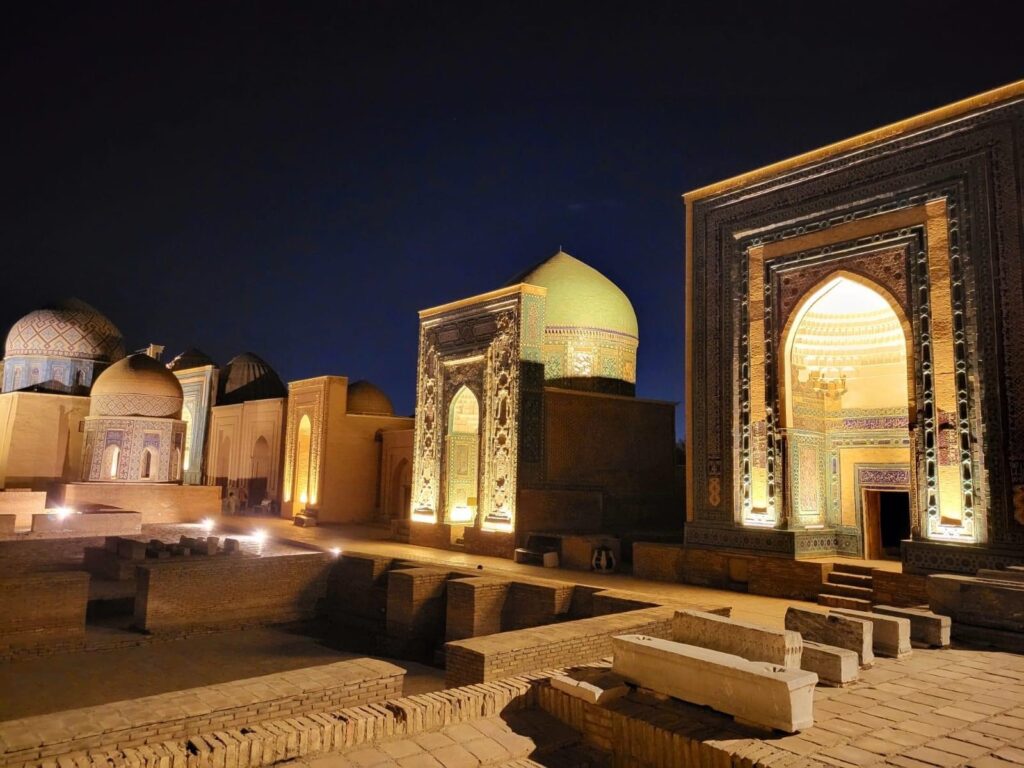
Samarkand — the excavations of ancient Marakanda and the Afrosiab Museum take us back to the origins of Samarkand. Just outside the city lies the astonishingly modern Ulugh Beg Observatory: Long before the invention of the telescope, the astronomer observed the celestial events with the naked eye, designed a star atlas, and measured the position of the Earth’s axis. Right next to the bustling bazaar, we visit the Shahi-Zinda necropolis, which dates back to Kusam ibn Abbas, a cousin of the Prophet Muhammad. In the late afternoon, we travel by train to Tashkent.

Day 11: Return

Tashkent — early morning drive to the airport and return flight to Germany.

Included services:

Overnight stays with breakfast in a room with bath or shower and toilet

All transfers and transportation during the tour in comfortable, air-conditioned vehicles

Train journey from Samarkand to Tashkent

Guided tour in German in Khiva, Bukhara, Samarkand, and Tashkent.

One dinner in Khiva with a local family and one lunch during the journey from Khiva to Bukhara.

Entrance fees for the monuments

Domestic flight from Tashkent to Urgench

Not included:

International flight

Lunch and dinner

Travel insurance


                                 Hotels


Location Hotels
Khiva Hotel Darvaza or hotel Grand Vizir
Bukhara Hotel Komil Boutique or Hotel Emirald
Samarkand Hotel Konstantin or Hotel Konstantin Plaza
Tashkent Hotel Unique or Hotel MaxWell